En Español Abajo
During Black History Month, we honor the leaders who shaped our past. But history is not only something we remember, it is something we build.
In California’s Central Valley, a region marked by economic hardship, environmental injustice, and entrenched disparities for low-income and frontline residents, that history is unfolding across generations.
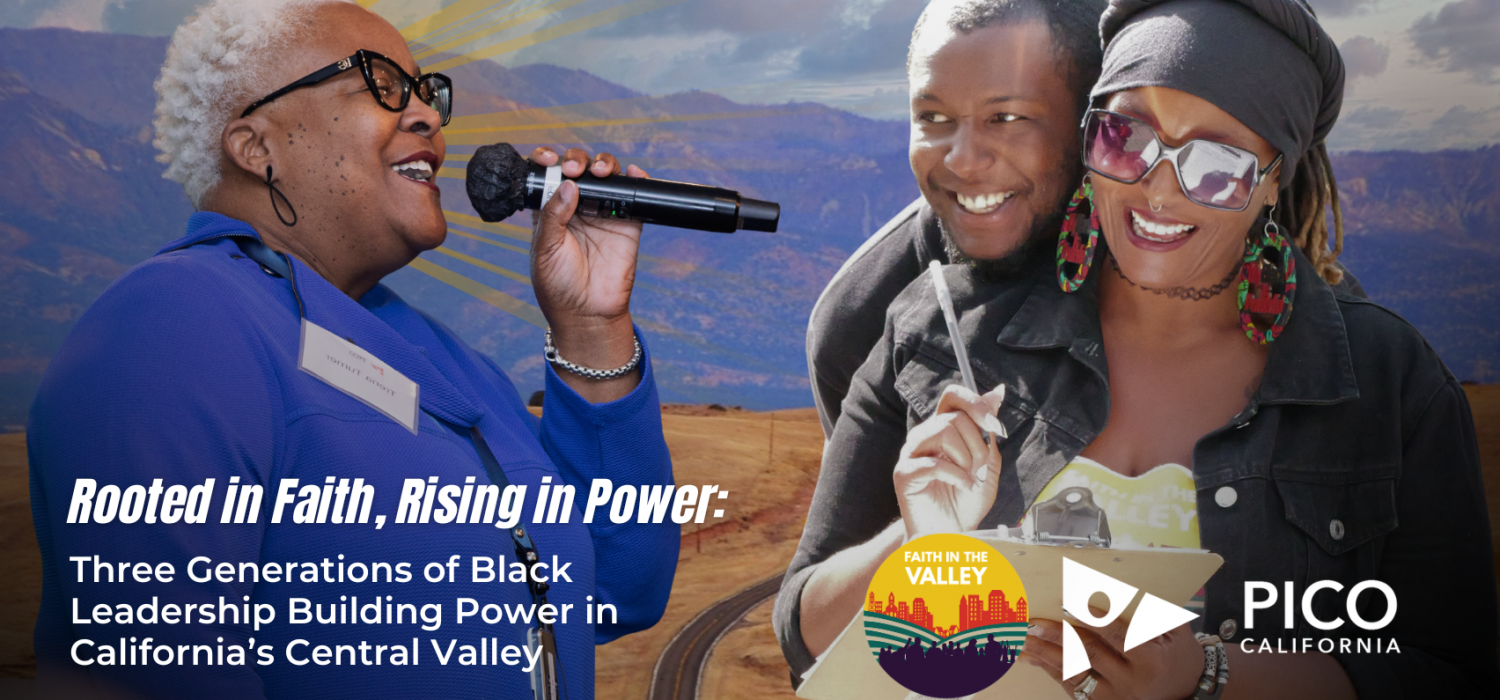
Pastor Trena Turner, her daughter Tia Barnes, and grandson Dajon Davis represent three generations of leadership within Faith in the Valley, a PICO California federation organizing across Fresno, Merced, Kern, Stanislaus, and San Joaquin counties. Their story reveals how social movements are sustained not only by strategy, but by lineage, by faith passed down, courage modeled and responsibility embraced.
Through house meetings, local organizing, and relationship-based power building, they are transforming hope into action, proving that the future of justice in the Valley is being shaped from the ground up. What begins in living rooms, in sacred conversations where neighbors share their stories, grows into campaigns, civic engagement, and statewide impact.
This is what intergenerational organizing looks like.
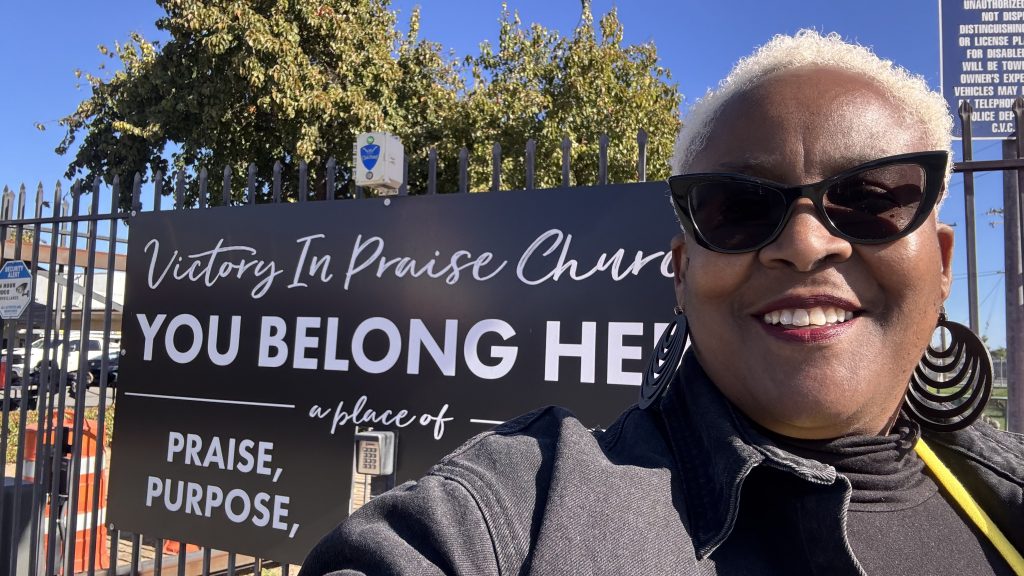
Pastor Trena Turner, Former Executive Director of Faith in the Valley. Photo courtesy of Pastor Trena
The Root: Faith as both comfort and catalyst
Pastor Trena Turner did not begin her ministry dismantling systems. She began by serving people.
She was introduced to faith-rooted organizing by Pastor Amelia Adams, who, she says, “loved me enough to patiently lead me into a space I had no previous awareness of.” Though she had long engaged in church outreach, she came to realize something deeper: The work of faith was not only to respond to need, but to confront the systems creating that need in the first place.
“Prayer and preaching were only part of the assignment,” she explains. “We were also called to stand alongside people as they navigated systems that often left them unheard.”
For Pastor Trena, faith is both comfort and catalyst. It meets people in their grief and uncertainty and it pushes them toward action. It reminds communities that they are not alone, and it calls them to believe they have a role in shaping what comes next.
As the Former Executive Director of Faith in the Valley, which organizes around racial justice, health equity, civic engagement and alternatives to incarceration, she sees organizing as deeply spiritual work. It honors people’s stories. It helps them recognize their own strength. It invites communities to move from isolation to collective power. Leadership, she says, must always remain rooted in people. “Policies matter, systems matter, but people matter most. Leadership isn’t about being the loudest voice in the room. It’s about making space for others and making sure no one feels invisible.”
That philosophy extends far beyond campaigns and strategy. It lives in her family. When asked what it means to see her daughter and grandchildren carrying the work forward, “It means everything to me,” she says. There’s a deep sense of gratitude in seeing the next generations not just watching the work, but stepping into it in their own way. It tells me what the values we’ve tried to live by: compassion, courage, and responsibility to community, are taking root.”
She speaks of Tia with admiration. “Tia is amazing and a force to be reckoned with,” she says. “She brings fresh energy, new ideas, and a perspective that keeps the work growing.”
She describes Dajon as a “gentle giant”, 6 ‘6 with a heart of gold, someone deeply concerned about the economy and the future of the nation. “This is legacy work,’ she says. “It’s not about one person. It’s about preparing the ground so others can continue building.”
For Pastor Trena, nurturing leadership across generations is intentional. It requires patience, the same patience that was once extended to her. It means walking alongside emerging leaders, not over them. It means sharing wisdom while also creating space for new voices and ideas.
Across family and federations alike, the goal is the same: cultivating leaders who understand that faith must move beyond comfort and into action, and that movements endure when responsibility is shared.
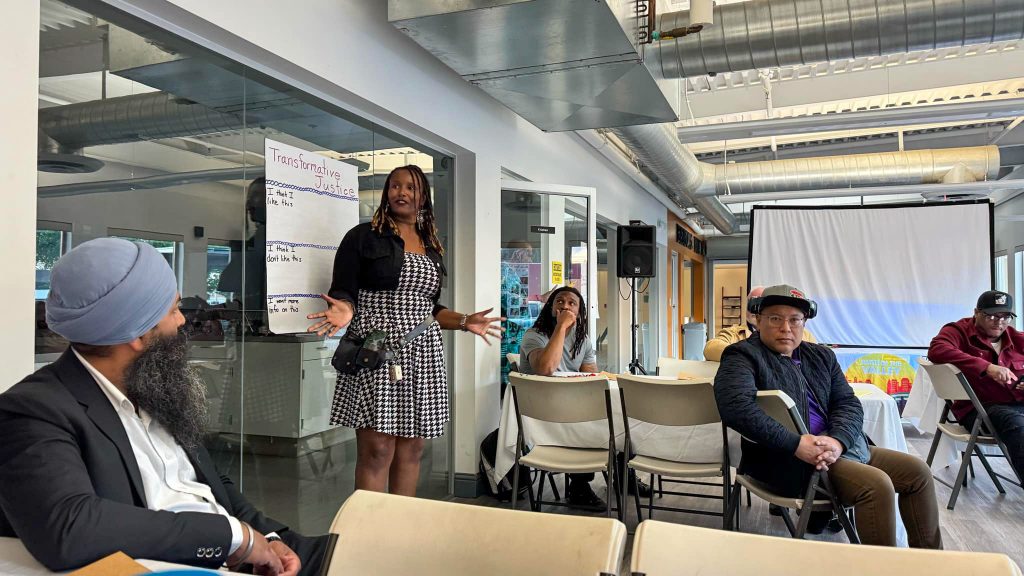
Tia Barnes, organizer with Faith in the Valley. Photo courtesy of Tia Barnes.
The Bridge: Expanding the circle of “My People”
For Tia Barnes, organizing did not arrive in a single lightning-bolt moment. It unfolded over time. “I think I was born to help the people I love,” she reflects. “As I’ve gotten older. The only thing that’s changed is the definition of who ‘my people’ are. The circle widened, so the work did too.”
Raised in ministry and movement, she grew up participating in the vision her parents were building. When she came old enough to choose her own path, she faced a question: What would it look like to walk away from what I know is right and deeply needed? Her answer was simple, show up.
One of the most powerful ways she shows up is through house meetings, small, sacred gatherings where neighbors come together to share their stories and identify shared concerns. These conversations are the heartbeat of Faith in the Valley’s organizing model and the starting point of building people power from the ground up.
“Every time I share space with a new group of people, it opens up an entirely new world or perspective I didn’t know existed,” she says. “Being with people who feel safe enough to speak their truth – and allowing us to hold that truth with them – is sacred.”
In a region where many families struggle with rising costs of living and limited access to resources, house meetings become more than conversations. They are invitations into public life.
“Saying yes and actually showing up is a big deal,” Tia says. “It reminds people they’re not alone. Those connections become accountability partners. And accountability is essential in this work.” And sometimes, those conversations travel far beyond the living room.
Tia recalls taking a group of young adults to the State Capitol for the first time. One young woman, eight months pregnant, stood to speak about AB 904, legislation expanding health coverage for doulas, and how it would impact her ability to access maternal care. “After a long day of walking and waiting, she struggled just to stand,” Tia remembers. “But when it was time to speak, she stood boldly.” The bill passed.
For Tia, it was a reminder that what begins in house meetings can shape policy, and what local voices can drive statewide change through PICO California’s network.
For Tia, leadership today reflects that same shift. “It’s less about being chosen and more about choosing to show up,” she says. “We don’t need one person to carry it all. Leadership looks like many hands, many voices, and shared responsibility.”
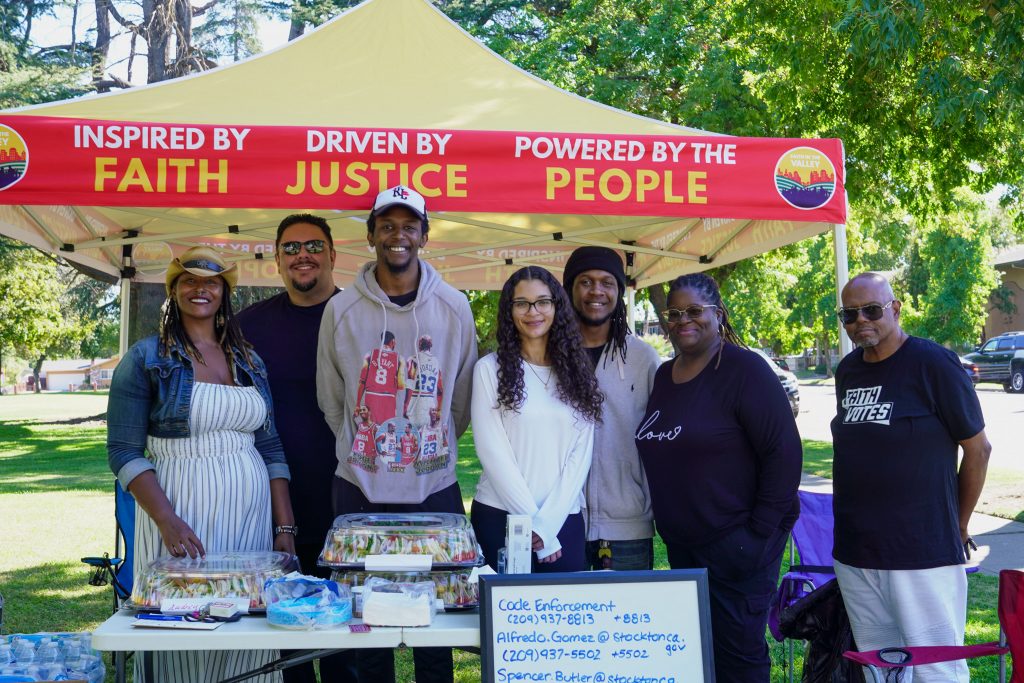
From left to right: Tia Barnes, Eddie Carmona, Dajon Davis, and Faith in the Valley members. Photo courtesy of Faith in the Valley.
The next generation: Connection as power
Dajon Davis has grown up inside organizing spaces, watching his mother and grandmother lead with strength and steadiness.
What inspires him most about his mom is her intensity and creativity. “She goes as hard as she can for every event,” he says. “She always finds a way to make it 10x better.”
From his grandmother, he draws something different: assurance. “She could always make me feel like, no matter what, we gone be okay,” he says. “Having the wisdom to have faith in the unknown, that whatever comes, we’re gonna be alright.”
For Dajon, organizing is fundamentally about connection. “It starts with identifying the shared problem,” he explains. “But it only becomes powerful when people realize they’re not alone.”
At community gatherings, he notices both hope and exhaustion, the emotional weight people carry from navigating systems that often move slowly or fail to respond. That exhaustion, he says, has become normalized.
And yet, he sees resilience in how his generation responds. Through social media, volunteering, house meetings and simply showing up, young people are creating a space where others feel heard, supported, and less alone. “At the core of it,’ he says, “our goal is to spread knowledge and make sure people feel heard, supported, and not alone.”
When he imagines the future of the Central Valley, his hopes are clear: stability, accessibility and the ability to build beyond survival. “A healthy community,’ he says, “is one where people aren’t just surviving, but actually able to grow and build a future.”
It is a vision grounded not only in hope, but in the kind of people power that begins with connection and grows across generations.
Living Black History
Black leadership in the Central Valley has long been rooted in faith communities, churches serving not only as spiritual homes, but as organizing hubs.
For Pastor Trena, watching her daughter and grandchildren step into organizing is both humbling and affirming. “This is the legacy work,” she says. It’s about preparing the ground so others can continue building.”
That preparation is happening in living rooms and sanctuaries, in house meetings where neighbors share their stories, in young people choosing to show up, in families deciding that faith must move beyond words and into public life.
Movements endure when leadership is cultivated, not concentrated. When faith becomes action. When conversation becomes community, and community becomes change.
This Black history month, we honor the giants who shaped the path before us. But we also recognize the history being written now, in the Central Valley, where generations are building people power from the ground up.
En Español:
Arraigados en la fe, creciendo en poder: Tres generaciones de liderazgo afroamericano construyendo poder en el Valle Central de California
Durante el Mes de la Historia Afroamericana, honramos a los líderes que forjaron nuestro pasado. Pero la historia no es solo algo que recordamos, es algo que construimos.
En el Valle Central de California, una región marcada por dificultades económicas, injusticia ambiental y desigualdades profundamente arraigadas para residentes de bajos ingresos y comunidades en la primera línea, esa historia se está desarrollando a través de generaciones.
La Pastora Trena Turner, su hija Tia Barnes y su nieto Dajon Davis representan tres generaciones de liderazgo dentro de Faith in the Valley, una federación de PICO California que organiza en los condados de Fresno, Merced, Kern, Stanislaus y San Joaquín. Su historia revela cómo los movimientos sociales se sostienen no solo por la estrategia, sino por el linaje, por una fe transmitida, un valor modelado y una responsabilidad asumida.
A través de reuniones en casa, organización local y construcción de poder basada en relaciones, están transformando la esperanza en acción, demostrando que el futuro de la justicia en el Valle se está forjando desde la base. Lo que comienza en salas de estar, en conversaciones sagradas donde vecinos comparten sus historias, crece hasta convertirse en campañas, participación cívica e impacto estatal.
Así es como se ve la organización intergeneracional.
La raíz: La fe como consuelo y catalizador
La Pastora Trena Turner no comenzó su ministerio desmantelando sistemas. Comenzó sirviendo a las personas.
Fue introducida a la organización basada en la fe por la Pastora Amelia Adams, quien, según ella, “me amó lo suficiente como para guiarme pacientemente hacia un espacio del que no tenía conocimiento previo.” Aunque durante mucho tiempo participó en el alcance comunitario de la iglesia, llegó a comprender algo más profundo: el trabajo de la fe no era solo responder a la necesidad, sino confrontar los sistemas que crean esa necesidad desde el principio.
“La oración y la predicación eran solo parte de la asignación”, explica. “También estábamos llamados a estar al lado de las personas mientras navegaban sistemas que con frecuencia no las escuchaban.”
Para la Pastora Trena, la fe es consuelo y catalizador. Acompaña a las personas en su dolor e incertidumbre, y al mismo tiempo las impulsa hacia la acción. Les recuerda a las comunidades que no están solas y las llama a creer que tienen un papel en dar forma a lo que viene.
Como Ex Directora Ejecutiva de Faith in the Valley, que organiza en torno a la justicia racial, la equidad en salud, la participación cívica y alternativas al encarcelamiento, ve la organización como un trabajo profundamente espiritual. Honra las historias de las personas. Les ayuda a reconocer su propia fortaleza. Invita a las comunidades a pasar del aislamiento al poder colectivo.
El liderazgo, afirma, siempre debe permanecer arraigado en la gente. “Las políticas importan, los sistemas importan, pero las personas importan más. El liderazgo no se trata de ser la voz más fuerte en la sala. Se trata de hacer espacio para otros y asegurarse de que nadie se sienta invisible.”
Esa filosofía va mucho más allá de las campañas y la estrategia. Vive en su familia. Cuando se le pregunta qué significa ver a su hija y a sus nietos continuar el trabajo, responde: “Significa todo para mí.” Hay una profunda gratitud al ver que las nuevas generaciones no solo observan el trabajo, sino que dan un paso al frente a su manera. “Me dice que los valores que hemos tratado de vivir —compasión, valentía y responsabilidad con la comunidad— están echando raíces.”
Habla de Tia con admiración. “Tia es increíble y una fuerza imparable”, dice. “Aporta energía fresca, nuevas ideas y una perspectiva que mantiene el trabajo creciendo.”
Describe a Dajon como un “gigante gentil”, de 1.98 metros, con un corazón de oro, alguien profundamente preocupado por la economía y el futuro de la nación. “Este es un trabajo de legado”, afirma. “No se trata de una sola persona. Se trata de preparar el terreno para que otros puedan seguir construyendo.”
Para la Pastora Trena, cultivar liderazgo entre generaciones es intencional. Requiere paciencia, la misma paciencia que una vez le fue extendida a ella. Significa caminar junto a líderes emergentes, no por encima de ellos. Significa compartir sabiduría y al mismo tiempo crear espacio para nuevas voces e ideas.
Tanto en la familia como en las federaciones, el objetivo es el mismo: formar líderes que comprendan que la fe debe ir más allá del consuelo y convertirse en acción, y que los movimientos perduran cuando la responsabilidad se comparte.
El puente: Ampliando el círculo de “mi gente”
Para Tia Barnes, la organización no llegó en un solo momento revelador. Se fue desarrollando con el tiempo. “Creo que nací para ayudar a la gente que amo”, reflexiona. “A medida que he crecido, lo único que ha cambiado es la definición de quién es ‘mi gente’. El círculo se amplió, y también el trabajo.”
Criada entre ministerio y movimiento, creció participando en la visión que sus padres estaban construyendo. Cuando tuvo la edad suficiente para elegir su propio camino, enfrentó una pregunta: ¿Cómo sería alejarme de lo que sé que es correcto y profundamente necesario? Su respuesta fue sencilla: presentarse.
Una de las formas más poderosas en que se presenta es a través de reuniones en casa, pequeños encuentros sagrados donde vecinos se reúnen para compartir sus historias e identificar preocupaciones comunes. Estas conversaciones son el corazón del modelo organizativo de Faith in the Valley y el punto de partida para construir poder popular desde la base.
“Cada vez que comparto espacio con un nuevo grupo de personas, se abre un mundo o una perspectiva completamente nueva que no sabía que existía”, dice. “Estar con personas que se sienten lo suficientemente seguras para decir su verdad —y permitirnos sostener esa verdad con ellas— es sagrado.”
En una región donde muchas familias luchan con el aumento del costo de vida y el acceso limitado a recursos, las reuniones en casa se convierten en algo más que conversaciones. Son invitaciones a la vida pública.
“Decir que sí y realmente presentarse es algo grande”, dice Tia. “Le recuerda a la gente que no está sola. Esas conexiones se convierten en alianzas de responsabilidad. Y la responsabilidad es esencial en este trabajo.”
Y a veces, esas conversaciones trascienden la sala de estar.
Tia recuerda haber llevado a un grupo de jóvenes adultos al Capitolio estatal por primera vez. Una joven, con ocho meses de embarazo, se puso de pie para hablar sobre la AB 904, una legislación que amplía la cobertura de salud para doulas, y cómo impactaría su acceso a atención materna. “Después de un largo día caminando y esperando, apenas podía ponerse de pie”, recuerda Tia. “Pero cuando llegó el momento de hablar, se levantó con valentía.” El proyecto de ley fue aprobado.
Para Tia, fue un recordatorio de que lo que comienza en reuniones en casa puede moldear políticas públicas, y que las voces locales pueden impulsar cambios estatales a través de la red de PICO California.
Hoy, el liderazgo refleja ese mismo cambio. “Se trata menos de ser elegido y más de elegir presentarse”, dice. “No necesitamos que una sola persona lo cargue todo. El liderazgo se ve como muchas manos, muchas voces y responsabilidad compartida.”
La próxima generación: La conexión como poder
Dajon Davis ha crecido dentro de espacios de organización, observando a su madre y a su abuela liderar con firmeza y constancia.
Lo que más le inspira de su mamá es su intensidad y creatividad. “Ella da todo en cada evento”, dice. “Siempre encuentra la manera de hacerlo diez veces mejor.”
De su abuela aprende algo distinto: seguridad. “Siempre podía hacerme sentir que, pase lo que pase, vamos a estar bien”, dice. “Tener la sabiduría de confiar en lo desconocido, de que lo que venga, vamos a salir adelante.”
Para Dajon, la organización se trata fundamentalmente de conexión. “Comienza identificando el problema compartido”, explica. “Pero solo se vuelve poderosa cuando las personas se dan cuenta de que no están solas.”
En reuniones comunitarias, observa tanto esperanza como agotamiento, el peso emocional que muchas personas cargan al navegar sistemas que avanzan lentamente o no responden. Ese agotamiento, dice, se ha normalizado.
Y aun así, ve resiliencia en cómo responde su generación. A través de redes sociales, voluntariado, reuniones en casa y simplemente presentándose, jóvenes están creando espacios donde otros se sienten escuchados, acompañados y menos solos. “En el fondo”, dice, “nuestro objetivo es compartir conocimiento y asegurarnos de que las personas se sientan escuchadas, apoyadas y no solas.”
Cuando imagina el futuro del Valle Central, sus esperanzas son claras: estabilidad, accesibilidad y la capacidad de construir más allá de la supervivencia. “Una comunidad saludable”, dice, “es aquella donde las personas no solo sobreviven, sino que realmente pueden crecer y construir un futuro.”
Es una visión arraigada no solo en la esperanza, sino en el poder popular que comienza con la conexión y crece a través de generaciones.
Viviendo la Historia Afroamericana
El liderazgo afroamericano en el Valle Central ha estado históricamente arraigado en comunidades de fe, iglesias que no solo sirven como hogares espirituales, sino también como centros de organización.
Para la Pastora Trena, ver a su hija y a sus nietos asumir la organización es algo humilde y afirmador a la vez. “Este es el trabajo de legado”, dice. “Se trata de preparar el terreno para que otros puedan seguir construyendo.”
Esa preparación está ocurriendo en salas de estar y santuarios, en reuniones en casa donde vecinos comparten sus historias, en jóvenes que eligen presentarse, en familias que deciden que la fe debe ir más allá de las palabras y entrar en la vida pública.
Los movimientos perduran cuando el liderazgo se cultiva, no se concentra. Cuando la fe se convierte en acción. Cuando la conversación se transforma en comunidad, y la comunidad en cambio.
Este Mes de la Historia Afroamericana, honramos a los gigantes que abrieron el camino. Pero también reconocemos la historia que se está escribiendo ahora, en el Valle Central, donde generaciones están construyendo poder popular desde la base.