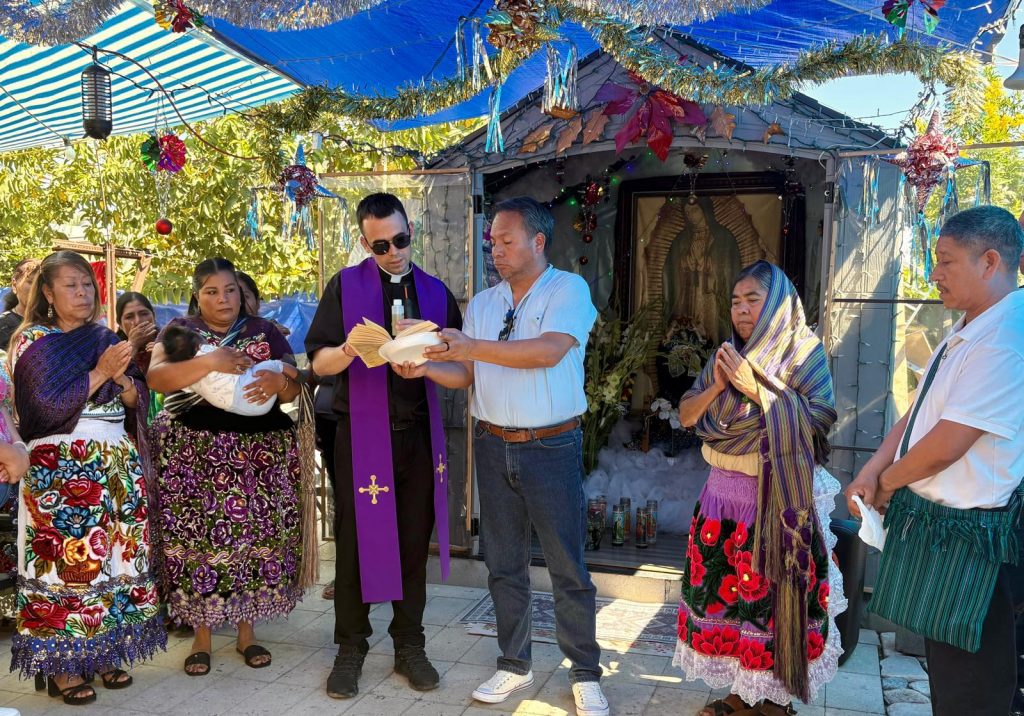
During the month of June, several local federations hosted Fr. Mattia Ferrari as part of a series of encounters across California during his larger tour of the United States.
Fr. Mattia is the Coordinator for the World Meeting of Popular Movements and serves as Chaplain of Mediterranea Saving Humans. He was accompanied by César Piscoya from the Latin American and Caribbean Episcopal Council (CELAM), who previously served under then-Bishop Robert Prevost in Peru, and Luca Casarini, founder of Mediterranea Saving Humans.
These were not one-way visits. They were mutual encounters.
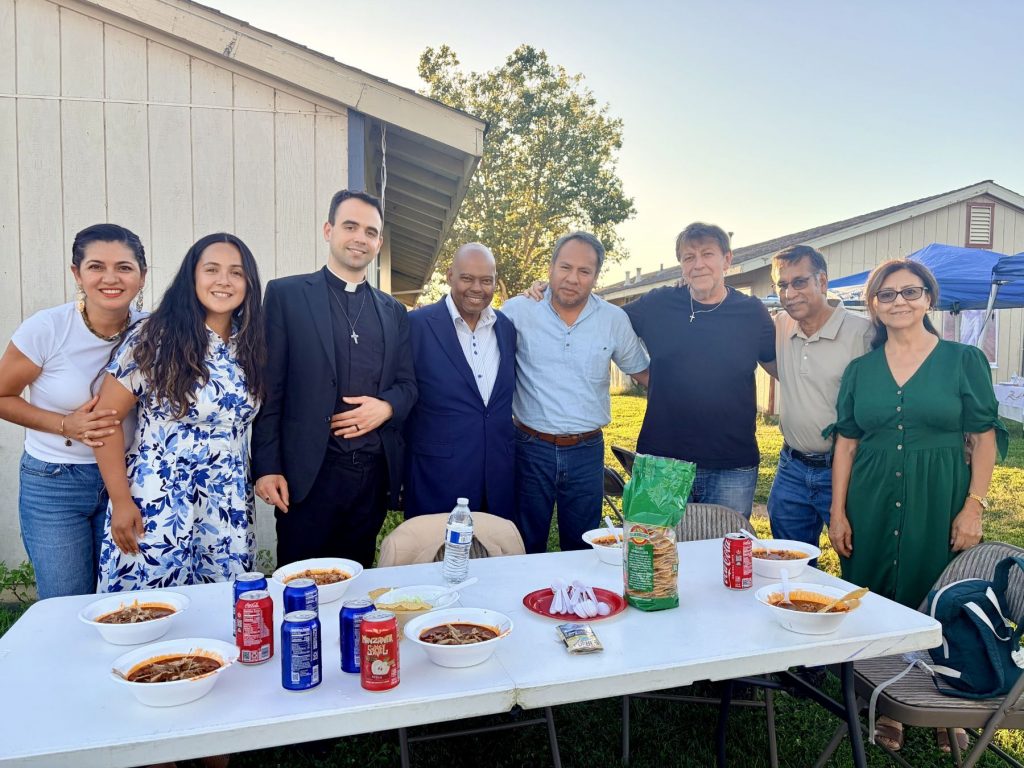
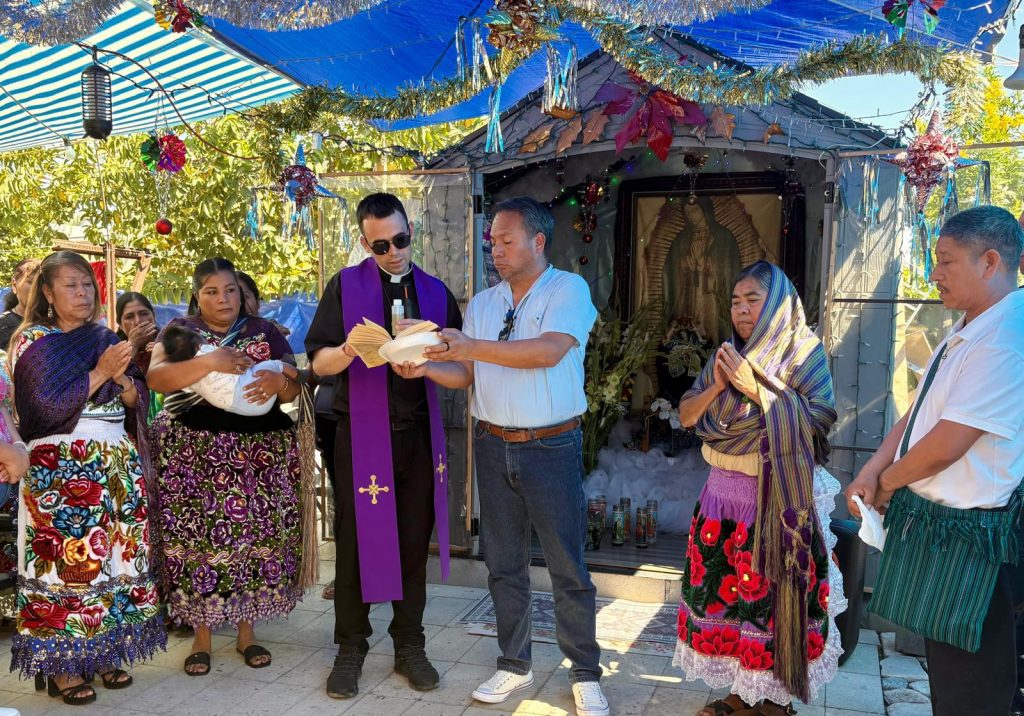
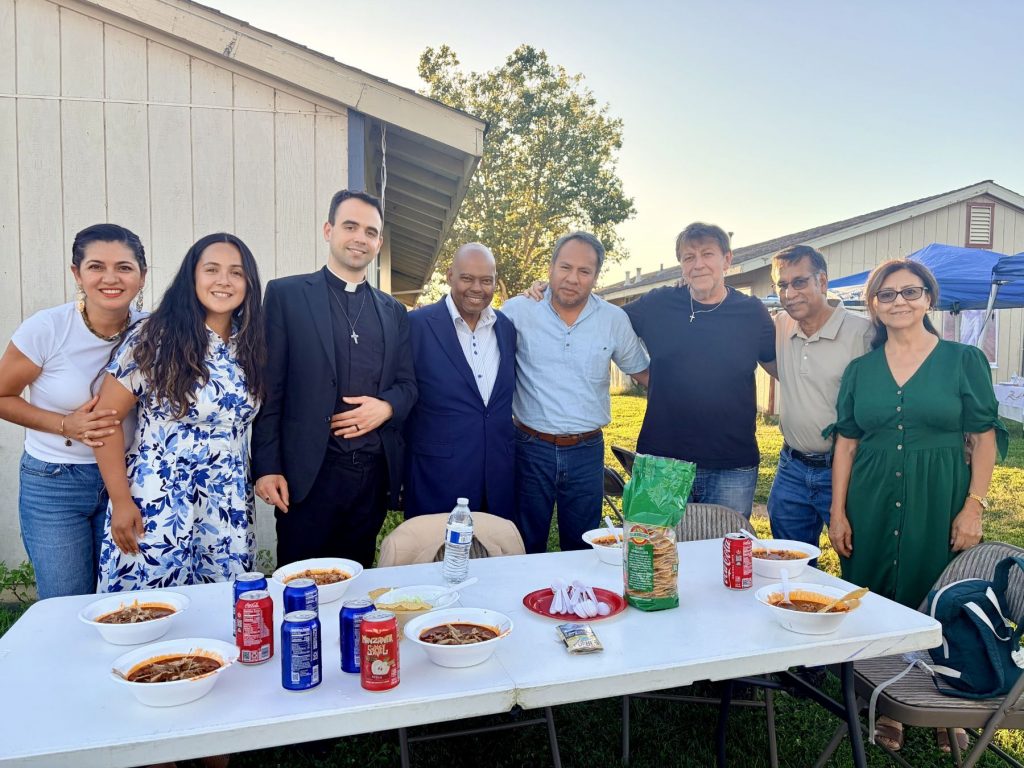
Fr. Mattia, César, Luca, and leaders from our federations shared stories, listened deeply to one another, prayed together, cried together, laughed together, and broke bread together. Every community welcomed them in its own way, but each encounter reflected the same truth: faith becomes real when it is lived alongside people.
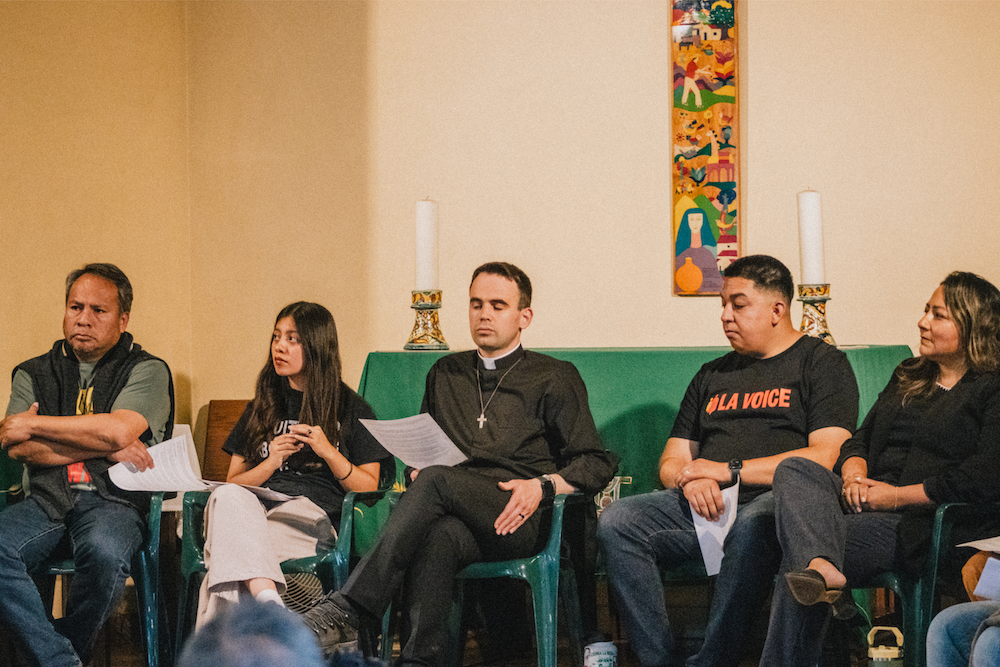
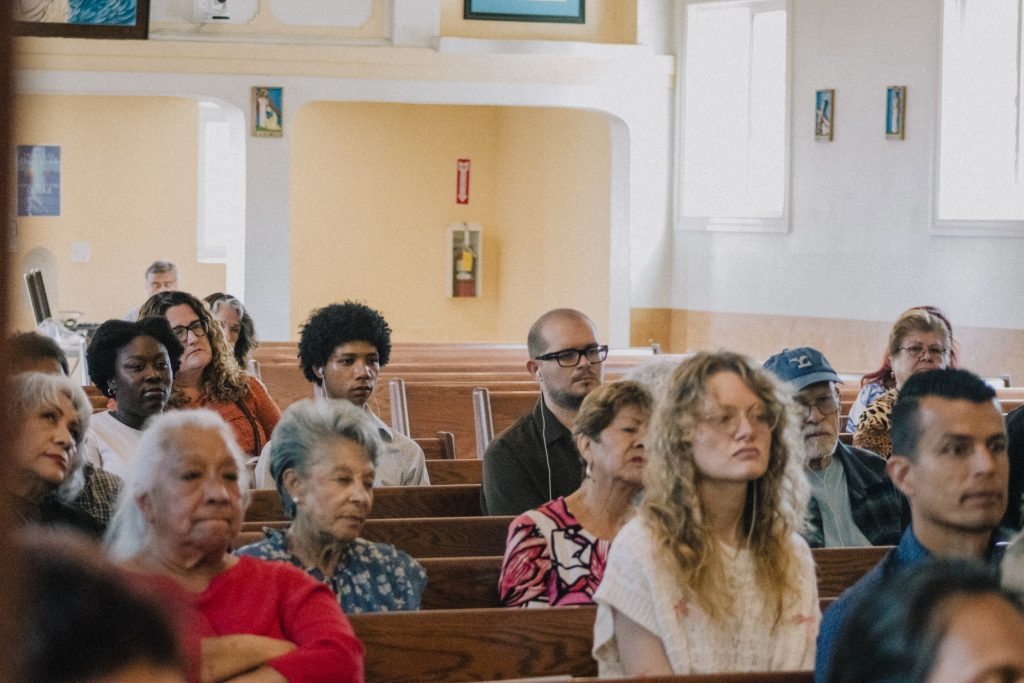
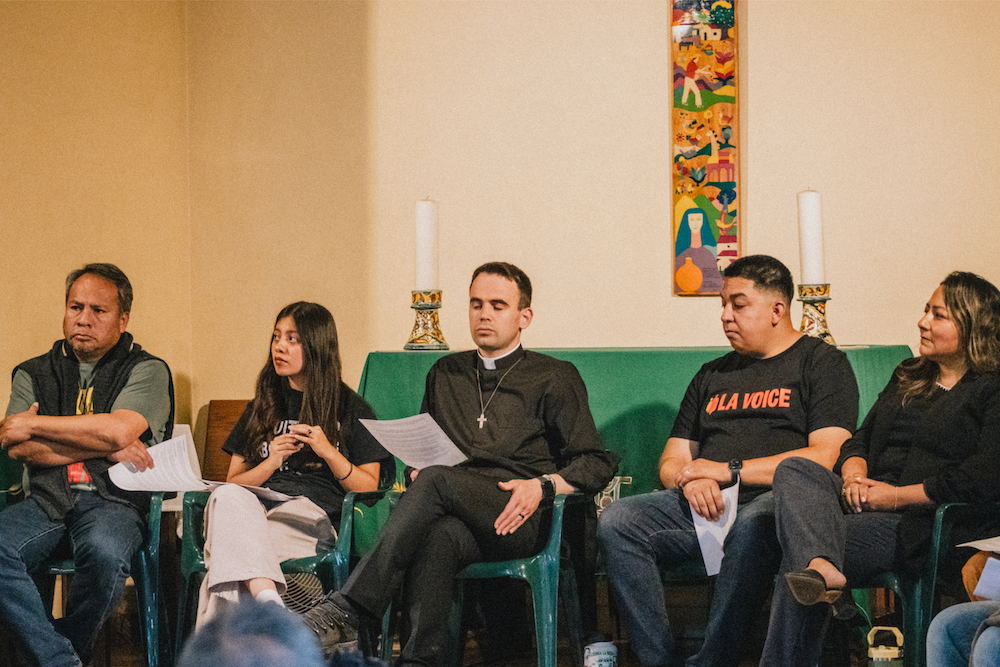
Over the course of the month, they visited Inland Congregations United for Change (ICUC), San Diego Organizing Project (SDOP), LA Voice, PACT, Faith in Action Bay Area (FIABA), Faith in Action East Bay (FIAEB), and Faith in the Valley. Every stop revealed a different reality, yet every community was asking the same question: What does our faith require of us at this moment?
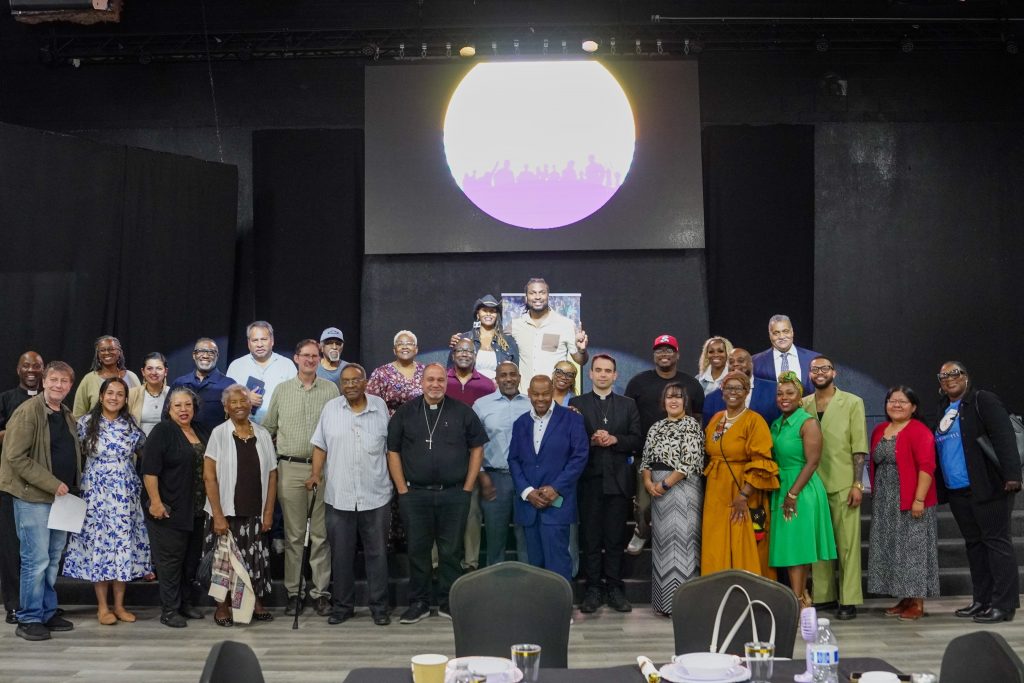
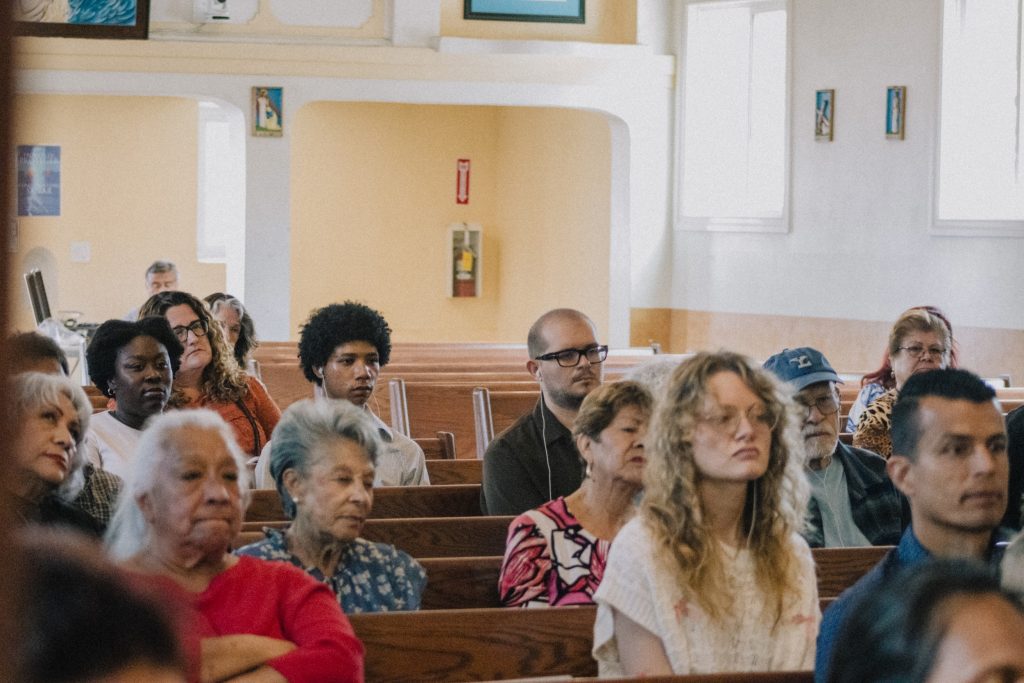
One of the most meaningful encounters took place in Stockton, where more than 25 Black clergy and leaders from the Central Valley and Sacramento gathered to welcome Fr. Mattia. This was not simply another stop on the trip. It was an opportunity for him to better understand the history that continues to shape Black communities and why that history matters as we organize for justice today.
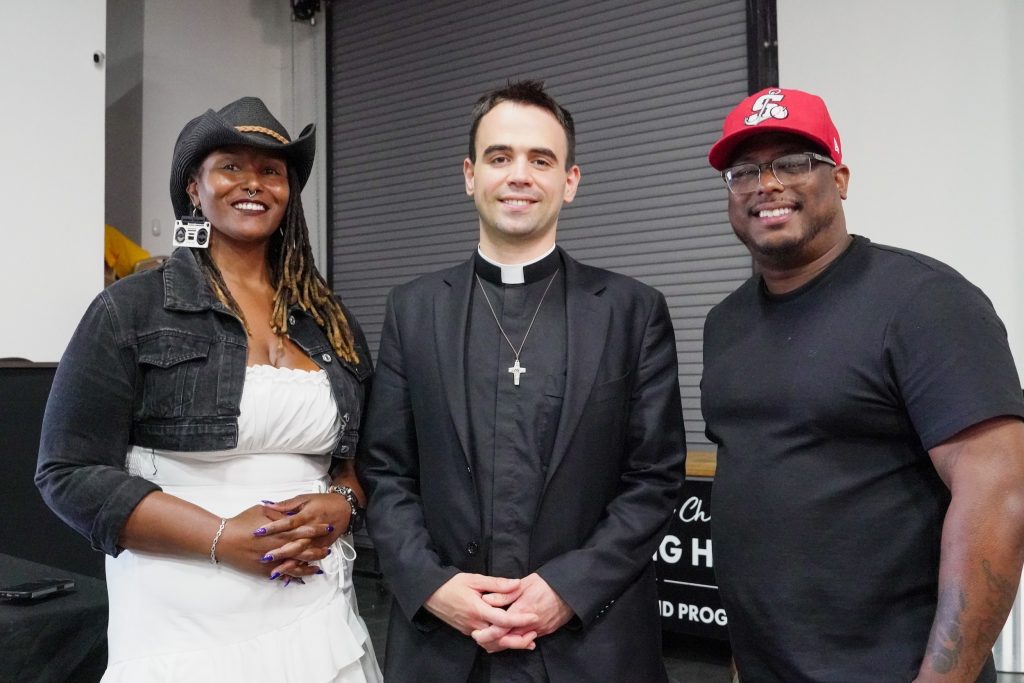
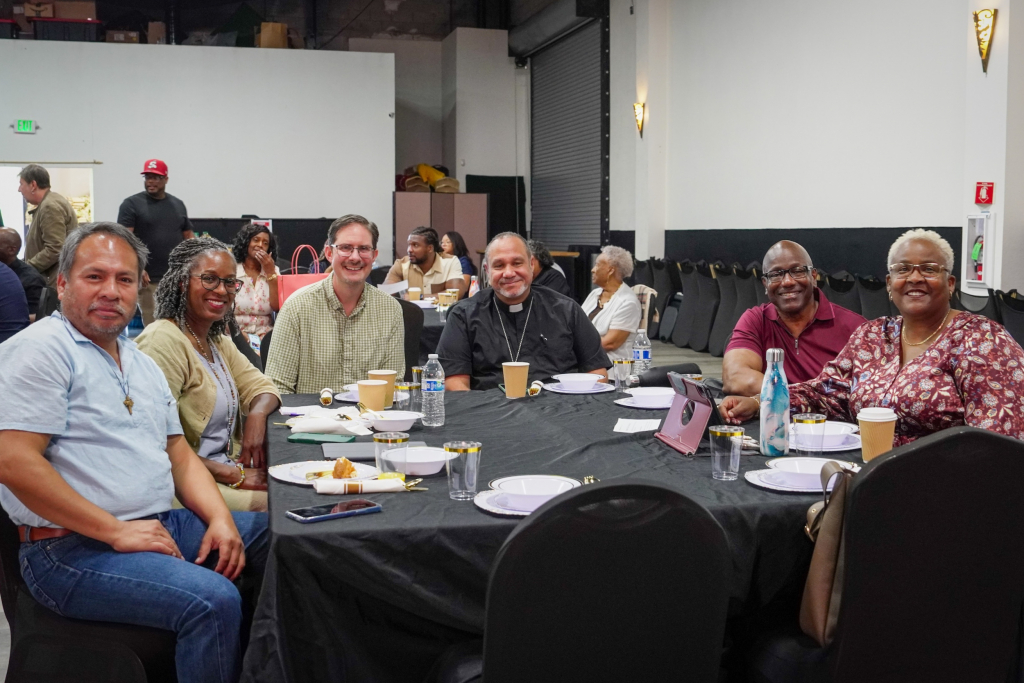
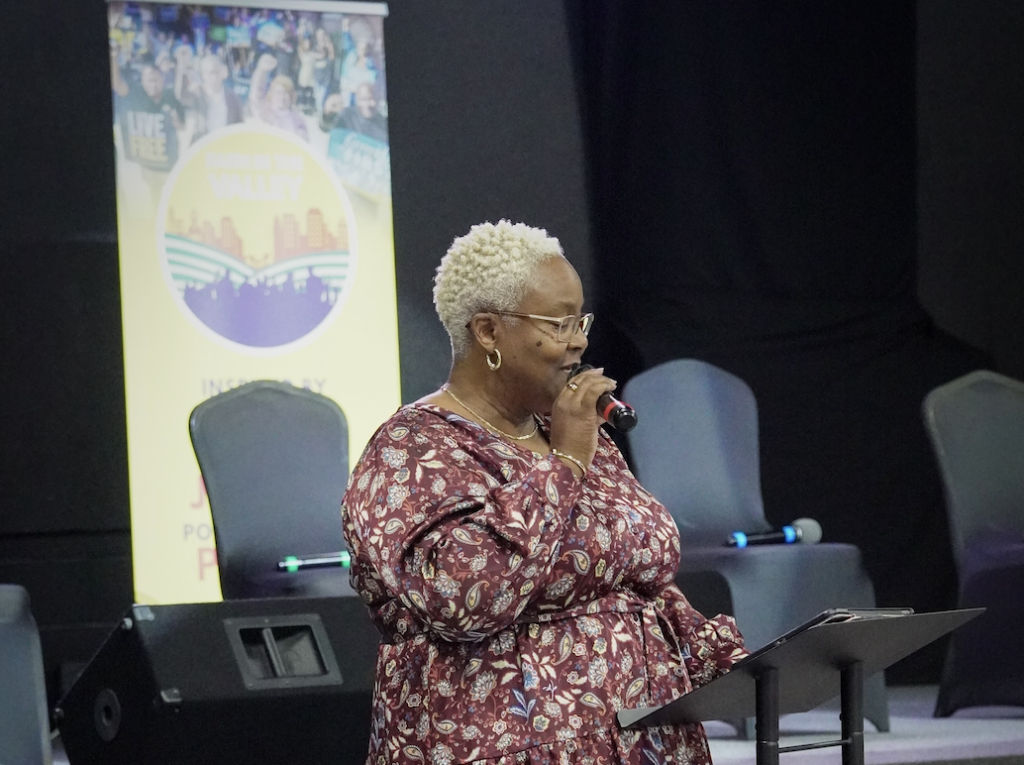
Pastor Trena Turner grounded the conversation by helping Fr. Mattia understand the Central Valley through the lens of history, faith, and lived experience.
She shared that while the region feeds much of the nation, it has also become one of the country’s largest corridors of incarceration and immigration detention. For decades, prisons have shaped the landscape. More recently, detention centers have become part of that same landscape. The result is that families across the Valley experience separation—not because they have lost their humanity, but because systems have determined where they belong.
Pastor Trena reminded us that these systems do not impact every community equally. Black communities continue to experience disproportionate incarceration at every stage of the criminal legal system. Black immigrants are detained and deported at rates far beyond their representation among immigrants. Latino families continue to carry the burden of detention, deportation, and family separation throughout the Valley.
She acknowledged that these are different histories and different wounds, but they call us to the same moral response.
The conversation about reparations asks how we repair the harm created by slavery, segregation, discrimination, and generations of unequal opportunity.
The conversation about immigration asks how we honor the dignity of people seeking safety, opportunity, and belonging. Neither diminishes the other.
Neither competes with the other. Both ask us the same question: What does love of neighbor require when people have been harmed by systems larger than themselves?
She reminded us that as faith leaders we are not called to rank suffering. We are called to recognize it. We are not called to divide compassion into categories. We are called to enlarge it. As Scripture says, “If one member suffers, all suffer together.” Our calling is not simply to comfort those who suffer, but to participate in God’s work of restoring dignity wherever it has been diminished.
For Fr. Mattia, this encounter was important because it connected the struggles he was witnessing around immigration to the longer story of racial injustice in our country. It demonstrated that organizing is strongest when communities refuse to compete over suffering and instead choose solidarity. It was a powerful reminder that the work of justice requires us to hold multiple truths at once and build relationships that can carry that weight together.
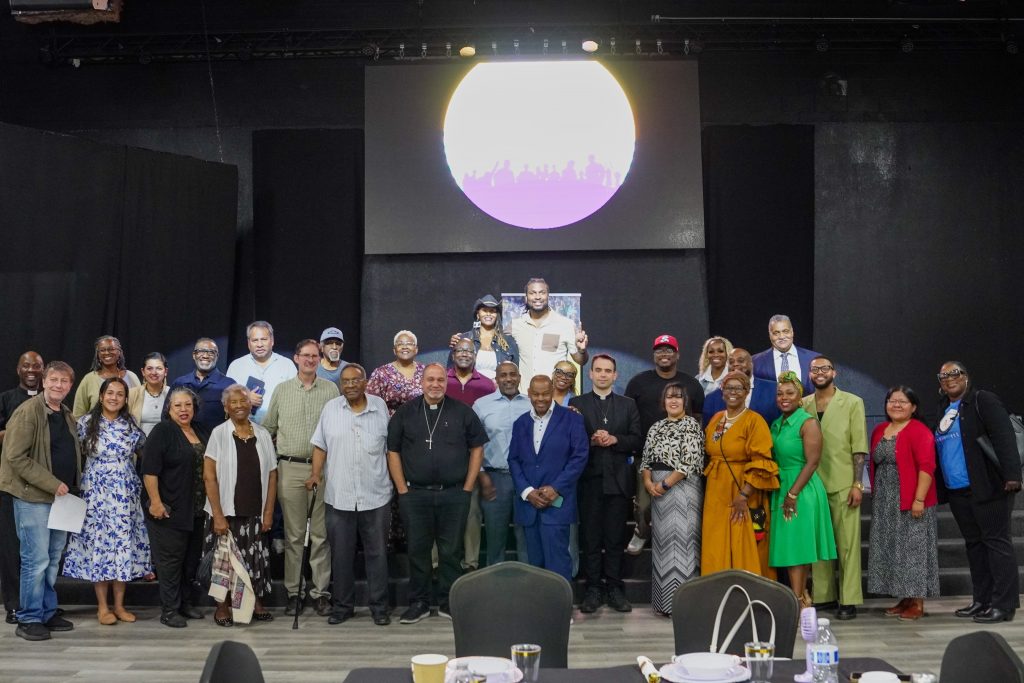
As the journey continued, every stop painted a different picture of what faithful organizing looks like.
In the Coachella Valley, migrant leaders with ICUC shared what it means to build a life in one of the harshest climates in California. Despite the extreme desert heat and growing fear of ICE activity, they spoke with remarkable determination. They are continuing to organize for something many families still struggle to access—basic healthcare for women and children. Their courage was evident not because they were without fear, but because they refused to let fear determine their future.
In San Jose, the encounter looked different. There, Fr. Mattia met Catholic volunteers from three dioceses who were preparing to grow accompaniment ministries. They talked about what it means for the Church to walk with immigrant families—not only through prayer, but by showing up in practical ways when families need someone beside them.
In Oakland, leaders described how illegal dumping has become part of daily life. They spoke about the financial costs of constantly cleaning up their neighborhoods, the emotional toll of feeling forgotten, and the impact on public health and safety. They also shared the challenges of rising housing costs and the growing concern that families are being pushed out of the communities they helped build.
In San Diego, Bishop Pham invited Fr. Mattia to witness the Diocese’s accompaniment ministry firsthand. Together they accompanied a family to an immigration hearing at the federal building. Inside the courtroom they saw families without attorneys trying to navigate a complicated legal process. Loved ones translated for one another because no one else was available. They watched a man with severe mental health needs struggle to answer basic questions from the court. It was a powerful reminder that accompaniment is not an abstract idea. Sometimes it simply means refusing to let someone face an impossible situation alone.
In Los Angeles, they gathered with leaders at Dolores Mission Parish. They encountered a parish where justice work is not treated as another ministry but as part of the identity of the community itself. Faith and organizing have become inseparable, shaping not only individual leaders but the life of the parish.
In Fresno, they joined the Valley Watch Network as they welcomed ten men who had just been released from immigration detention. None of them were from California. Volunteers met them with simple but life-giving acts of care: a phone so they could call their families, a warm meal, clean clothes, a backpack for the journey ahead, and help booking flights home. Many had left detention carrying everything they owned in large red mesh bags like those used to package onions. It was impossible to ignore how little they had when they walked out those doors—or how much dignity was restored by a community determined to receive them with compassion.
The final stop brought them to San Mateo, where immigrant leaders shared another story of local leadership. They have built and continue to operate their own immigrant support hotline, ensuring families have someone to call in moments of crisis. At the same time, they organized thousands of residents and gathered enough signatures to place rent control on the November ballot. Their work reminded us that caring for immigrant families and building long-term community power go hand in hand.
Looking back on the month, no two encounters were the same. Each community offered its own stories, its own challenges, and its own witness of faith in action. Yet together they formed a larger picture. Across California we met people choosing hope over fear, solidarity over division, and action over despair.
For Fr. Mattia, César, and Luca, these encounters offered a window into the realities people are living every day in the United States. For us, they reminded us that our work begins with listening. When we make room for genuine encounter, we begin to see one another more clearly, and in doing so, we become better able to respond to God’s call to stand with our neighbors and build a world where every person’s dignity is honored.
Pastor Trena Turner’s Opening Grounding Reflection
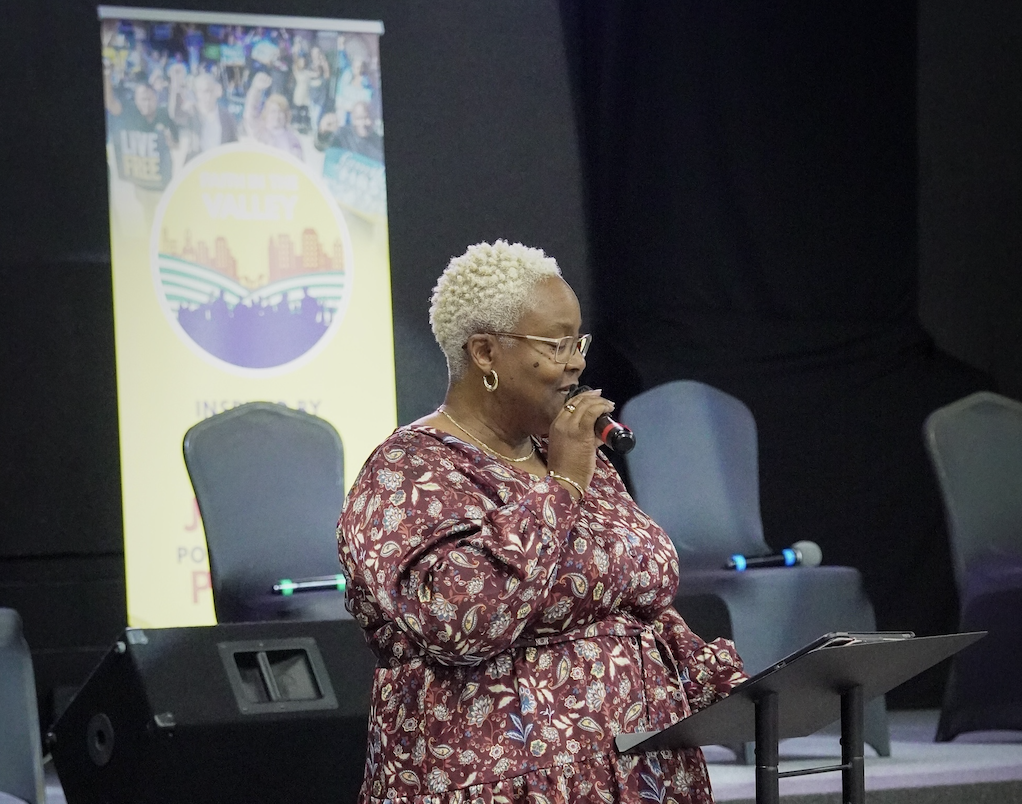
“Father Mattia, thank you for making the journey to California’s Central Valley. Your presence reminds us that while our communities may be separated by oceans, the work of justice, mercy, and human dignity belongs to one global family of faith.
Several years ago, I had the privilege of participating in the World Meeting of Popular Movements in Rome with Pope Francis. I also had the privilege of helping organize one of its gatherings here in the Central Valley. What I witnessed then—and what continues today—is the Church calling us not simply to care for people on the margins, but to walk with them.
That invitation brings us together today.
Here in the Central Valley, we live in a region that feeds much of the nation. Yet it has also become one of the nation’s largest corridors of incarceration and immigration detention.
For decades, prisons have shaped our landscape. More recently, detention centers have become part of that same landscape. The result is that many of our neighbors experience separation from their families—not because they have lost their humanity, but because systems have determined where they belong.
And while these realities affect many communities, they do not affect all communities equally.
Black communities continue to experience disproportionate incarceration at every stage of the criminal legal system. Black immigrants likewise face detention and deportation at rates that exceed their representation among the immigrant population. Latino families continue to bear the weight of detention, deportation, and family separation throughout our Valley.
These are different histories.
They are different wounds.
But they invite the same moral response.
The conversation around reparations asks how we repair the enduring harm left by slavery, segregation, discrimination, and generations of unequal opportunity.
The conversation around immigration asks how we honor the dignity of those seeking safety, opportunity, and belonging.
Neither conversation diminishes the other.
Neither competes with the other.
Both ask a common question:
What does love of neighbor require of us when people have been harmed by systems larger than themselves?
As faith leaders, we are not called to rank suffering. We are called to recognize it. We are not called to divide compassion into categories. We are called to enlarge it.
Scripture reminds us that “if one member suffers, all suffer together.” Our calling is not simply to comfort those who suffer, but to participate in God’s work of restoration wherever dignity has been diminished.
When I was in Rome, I came away convinced that the Church is at its best when it refuses to choose between proclaiming the Gospel and protecting human dignity. We can and should do both. The two have always belonged together.
My prayer is that today’s conversation helps us listen more deeply than we speak…to learn from one another…and to leave with renewed commitment to build communities where every person is seen, valued, and welcomed as a child of God.”
En Español
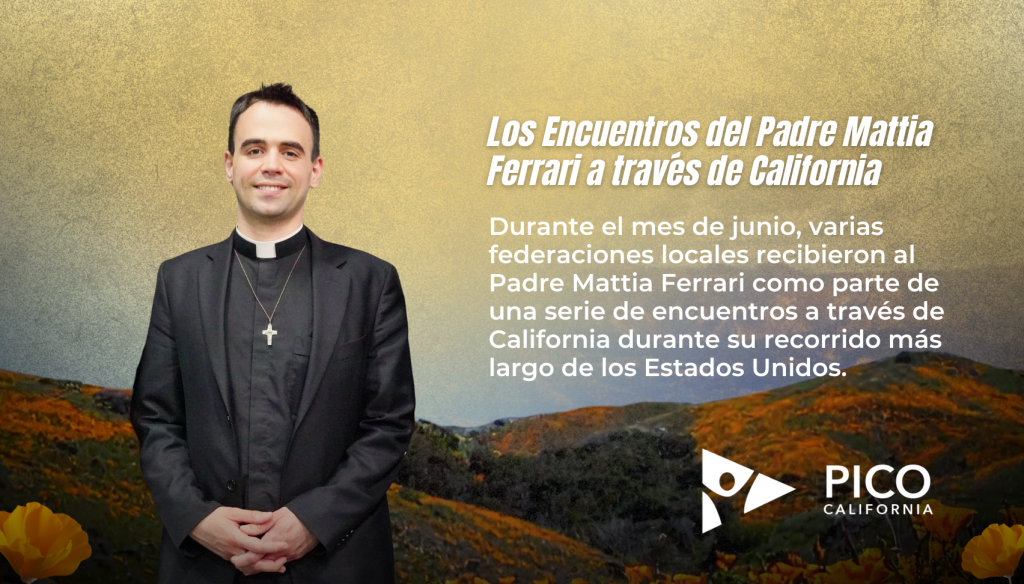
Los Encuentros del Padre Mattia Ferrari a través de California
Durante el mes de junio, varias federaciones locales recibieron al Padre Mattia Ferrari como parte de una serie de encuentros a través de California durante su recorrido más largo de los Estados Unidos.
El Padre Mattia es el Coordinador del Encuentro Mundial de Movimientos Populares y sirve como Capellán de Mediterranea Saving Humans. Fue acompañado por César Piscoya del Consejo Episcopal Latinoamericano y Caribeño (CELAM), quien sirvió previamente bajo el Obispo de ese momento Robert Prevost en Perú, y Luca Casarini, fundador de Mediterranea Saving Humans.
Estas no fueron visitas de una sola vía. Fueron encuentros mutuos.
El Padre Mattia, Luca y líderes de nuestras federaciones compartieron historias, se escucharon profundamente unos a otros, rezaron juntos, lloraron juntos, se rieron juntos, y comieron juntos. Todas las comunidades les dieron la bienvenida de su propia manera, pero cada encuentro reflejó la misma verdad: la fe se convierte en realidad cuando se vive junto a las personas.
En el transcurso del mes, visitaron a Inland Congregations United for Change (ICUC), San Diego Organizing Project (SDOP), LA Voice, PACT, Faith in Action Bay Area (FIABA), Faith in Action East Bay (FIAEB) y Faith in the Valley. Cada parada divulgó una realidad diferente; sin embargo, todas las comunidades hacían la misma pregunta: ¿Qué requiere de nosotros nuestra fe en este momento?
Uno de los encuentros más significativos se realizó en Stockton, donde más de 25 miembros del clero y líderes negros del Valle Central y Sacramento se reunieron para darle la bienvenida al Padre Mattia. Esto no fue simplemente otra parada del viaje. Fue una oportunidad para que él comprendiera mejor la historia que sigue formando a las comunidades negras y la razón de la importancia de esa historia a medida que organizamos por la justicia hoy en día.
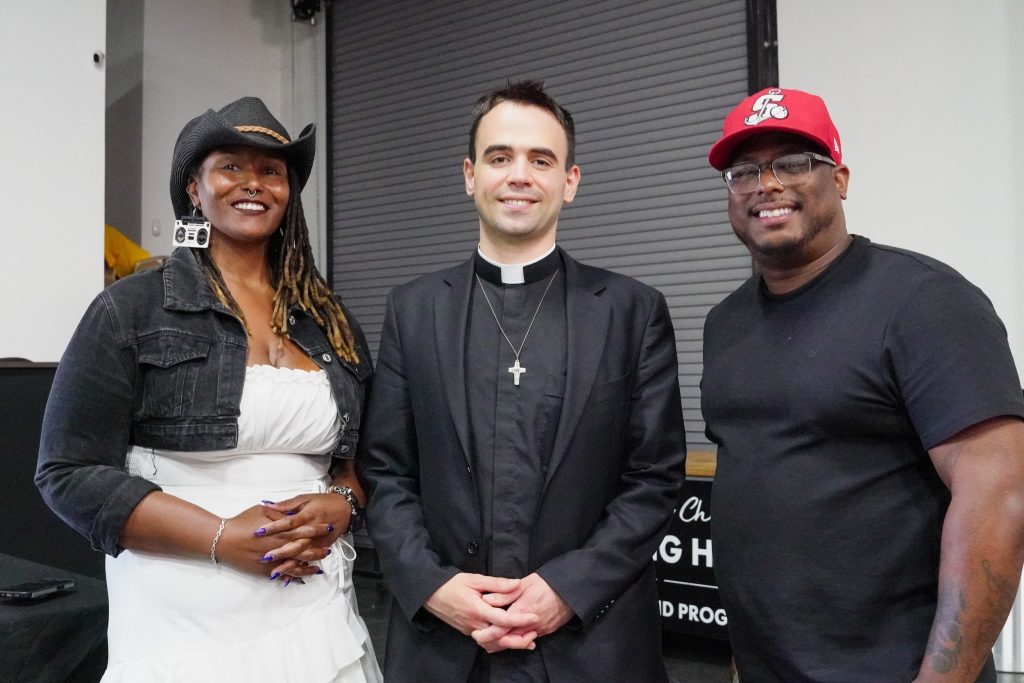
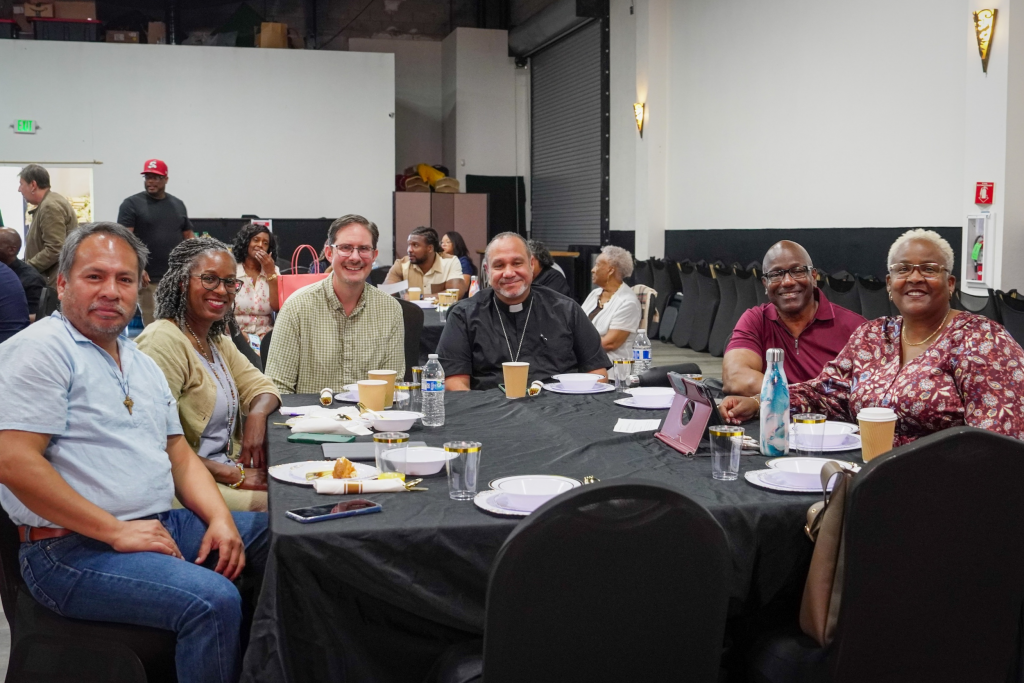
La Pastora Trena Turner centró la conversación ayudando al Padre Mattia a comprender al Valle Central por medio del lente de la historia, fe, y experiencia vivida.
Compartió que mientras que la región alimenta a una gran parte de la nación, también se ha convertido en uno de los corredores más grandes de la encarcelación y detención de inmigrantes. Por décadas, las prisiones han formado el panorama. Más recientemente, los centros de detención se han convertido en parte de ese mismo panorama. El resultado es que las familias a través del Valle experimentan la separación – no porque han perdido su humanidad, sino porque los sistemas han determinado dónde pertenecen.
La Pastora Trena nos recordó que estos sistemas no impactan a todas las comunidades de igual manera. Las comunidades negras siguen experimentando la encarcelación desproporcionada en cada etapa del sistema penal. Los inmigrantes negros son detenidos y deportados a un índice mucho mayor que su representación entre los inmigrantes. Las familias latinas siguen con la carga de las detenciones, deportaciones y separación de familias a través del Valle.
Reconoció que estas son diferentes historias y diferentes heridas, pero nos llaman a la misma respuesta moral.
La conversación acerca de reparaciones pregunta cómo reparamos el daño creado por la esclavitud, segregación, discriminación, y generaciones de oportunidades desiguales. La conversación acerca de la inmigración pregunta cómo honramos la dignidad de las personas que buscan la seguridad, oportunidad y pertenencia. Ninguna de las dos disminuye a la otra. Ninguna de las dos compite con la otra. Ambas nos hacen la misma pregunta: ¿Qué exige el amor al prójimo cuando las personas han sufrido daño por los sistemas más grandes que ellos?
Nos recordó que, como líderes de fe, no nos llaman a clasificar el sufrimiento. Nos llaman a reconocerlo. No nos llaman a dividir la compasión en categorías. Nos llaman a agrandarla. Como dicen las Escrituras, “Si un miembro sufre, todos sufren juntos.” Nuestro llamado no es simplemente consolar a los que sufren, sino participar en el trabajo de Dios de restaurar la dignidad donde ha sido disminuida.
Para el Padre Mattia, este encuentro fue importante porque conectó las luchas de las cuales estaba siendo testigo respecto a la inmigración a la historia más larga de la injusticia racial en nuestro país. Demostró que el trabajo organizador es más fuerte cuando las comunidades rehúsan competir por el sufrimiento y más bien eligen la solidaridad. Fue un recordatorio poderoso que el trabajo de la justicia nos obliga a mantener varias verdades al mismo tiempo y formar relaciones que pueden cargar ese peso juntos.
A medida que siguió el recorrido, cada parada pintaba una imagen diferente de lo que es el trabajo organizador de fe.
En el Valle de Coachella, los líderes migrantes con ICUC compartieron lo que significa crear una vida en uno de los climas más duros en California. A pesar del calor extremo del desierto y el miedo cada vez mayor de las actividades de ICE, hablaron con una determinación extraordinaria. Siguen organizando por algo que muchas familias siguen luchando por acceder – cuidado de salud básico para las mujeres y niños. Su valor fue evidente no porque no tenían miedo, sino porque rehusaron dejar que el miedo determine su futuro.
En San José, el encuentro fue diferente. Allí, el Padre Mattia conoció a voluntarios católicos de tres diócesis que se estaban preparando para crear ministerios de acompañamiento. Hablaron acerca de lo que significa que la Iglesia camine con las familias inmigrantes – no sólo por medio de las oraciones, sino presentándose de manera práctica cuando las familias necesitan a alguien a su lado.
En Oakland, los líderes describieron cómo el vertido ilegal se ha convertido en parte de sus vidas diarias. Hablaron acerca de los costos financieros de limpiar sus vecindarios constantemente, el costo emocional de sentirse olvidados, y el impacto a la salud y seguridad pública. También compartieron los desafíos de los costos cada vez más altos de la vivienda y la preocupación cada vez mayor que las familias están siendo expulsadas de las comunidades que ayudaron a construir.
En San Diego, el Obispo Pham invitó al Padre Mattia a ser testigo de primera mano del ministerio de acompañamiento de la Diócesis. Juntos acompañaron a una familia a una audiencia migratoria en el edificio federal. Dentro del tribunal vieron a familias sin abogados intentar navegar un proceso legal complicado. Los seres queridos interpretaron unos para otros porque nadie más estaba disponible. Observaron a un señor con necesidades severas de la salud mental luchando por contestar preguntas básicas del juez. Fue un recordatorio poderoso que el acompañamiento no es sólo una idea abstracta. A veces significa simplemente rehusar que alguien enfrente una situación imposible solo.
En Los Ángeles, se reunieron con líderes en la Parroquia Dolores Mission. Encontraron una parroquia donde el trabajo de la justicia no se trata solamente como otro ministerio sino como parte de la identidad de la comunidad en sí. La fe y el trabajo organizador se han convertido en algo inseparable, formando no sólo a los líderes individuales sino también la vida de la parroquia.
En Fresno, se unieron a Valley Watch Network mientras le daban la bienvenida a diez hombres que recién habían sido liberados de la detención migratoria. Ninguno de ellos era de California. Los voluntarios los encontraron con actos de cuidado sencillos pero dadores de vida: un teléfono para poder llamar a sus familias, una comida caliente, ropa limpia, una mochila para el viaje que les esperaba, y ayuda para reservar los vuelos a casa. Muchos habían salido de la detención cargando todo lo que tenían en bolsas grandes y rojas de malla como las que se usan para empacar las cebollas. Era imposible ignorar lo poco que tenían cuando salieron de esas puertas – o cuánta dignidad les restauró una comunidad determinada a recibirlos con compasión.
La última parada los llevó a San Mateo, donde los líderes inmigrantes compartieron otra historia del liderazgo local. Han creado y siguen operando su propia línea directa para apoyo de los inmigrantes, asegurando que las familias tengan a alguien para llamar en momentos de crisis. Al mismo tiempo, organizaron a miles de residentes y recolectaron suficientes firmas para colocar el control del alquiler en la boleta de noviembre. Su trabajo nos recordó que cuidar de las familias inmigrantes y crear el poder comunitario a largo plazo van de la mano.
Recordando ese mes, no hubo dos encuentros iguales. Cada comunidad ofreció sus propias historias, sus propios desafíos, y fue testigo propio de la fe en acción. Sin embargo, juntos formaron una imagen más grande. A través de California, conocimos a las personas eligiendo la esperanza por encima del miedo, la solidaridad por encima de la división, y la acción por encima de la desesperación.
Para el Padre Mattia, César, y Luca, esos encuentros ofrecieron una ventanilla a las realidades que viven las personas todos los días en los Estados Unidos. Para nosotros, nos recuerdan que nuestro trabajo comienza al escuchar. Cuando hacemos lugar para un encuentro genuino, comenzamos a vernos unos a otros con mayor claridad, y al hacer eso, podemos responder de mejor manera al llamado de Dios de defender a nuestros vecinos y crear un mundo donde se honra la dignidad de cada persona.
La Reflexión de Apertura para Centrarnos de la Pastora Trena Turner
“Padre Mattia, gracias por hacer el viaje al Valle Central de California. Su presencia nos recuerda que mientras pueden estar separadas nuestras comunidades por océanos, el trabajo de la justicia, misericordia y dignidad humana le pertenece a una familia global de fe.
Hace varios años, tuve el privilegio de participar en el Encuentro Mundial de Movimientos Populares en Roma con el Papa Francisco. También tuve el privilegio de ayudar a organizar una de sus reuniones aquí en el Valle Central. Lo que observé entonces – y lo que sigue hoy en día – es la Iglesia llamándonos no simplemente a cuidar a las personas en los márgenes, sino también caminar con ellos.
Esa invitación nos une hoy.
Aquí en el Valle Central, vivimos en una región que alimenta una gran parte de la nación. Sin embargo, también se ha convertido en uno de los corredores más grandes de la encarcelación y detención de inmigrantes en la nación.
Por décadas, las prisiones han formado el panorama. Más recientemente, los centros de detención se han convertido en parte de ese mismo panorama. El resultado es que muchos de nuestros vecinos experimentan la separación de sus familias – no porque han perdido su humanidad, sino porque los sistemas han determinado dónde pertenecen.
Y mientras que estos sistemas afectan a muchas comunidades, no impactan a todas las comunidades de igual manera.
Las comunidades negras siguen experimentando la encarcelación desproporcionada en cada etapa del sistema penal. De la misma manera, los inmigrantes negros son detenidos y deportados a un índice mucho mayor que su representación entre la población de inmigrantes. Las familias latinas siguen con la carga de las detenciones, deportaciones y separación de familias a través de nuestro Valle.
Estas son diferentes historias.
Estas son diferentes heridas.
Pero nos llaman a la misma respuesta moral.
La conversación acerca de reparaciones pregunta cómo reparamos el daño duradero que dejó la esclavitud, segregación, discriminación, y generaciones de oportunidades desiguales.
La conversación acerca de la inmigración pregunta cómo honramos la dignidad de las personas que buscan la seguridad, oportunidad y pertenencia.
Ninguna de las dos conversaciones disminuye a la otra.
Ninguna de las dos compite con la otra.
¿Qué exige el amor al prójimo cuando las personas han sufrido daño por los sistemas más grandes que ellos?
Como líderes de fe, no nos llaman a clasificar el sufrimiento. Nos llaman a reconocerlo. No nos llaman a dividir la compasión en categorías. Nos llaman a agrandarla.
Las Escrituras nos recuerdan que, “si un miembro sufre, todos sufren juntos.” Nuestro llamado no es simplemente consolar a los que sufren, sino participar en el trabajo de Dios de restaurar la dignidad donde ha sido disminuida.
Cuando estuve en Roma, me fui convencida que la Iglesia está en su mejor forma cuando rehúsa elegir entre proclamar el Evangelio y proteger la dignidad humana. Podemos y debemos hacer ambos. Ambos siempre han pertenecido juntos.
Mi oración es que la conversación de hoy nos ayude a escuchar más profundamente cuando hablamos…a aprender unos de otros…y salir con un compromiso nuevo de crear comunidades donde cada persona se ve, se valora, y es bienvenido como hijo de Dios.”